


The City of London Corporation and Historic England on balancing commerce with heritage

At our recent 'Cultural Cities' forum hosted by Historic Royal Palaces at the Tower of London, both the City of London Corporation and Historic England spoke about the need to enable growth while preserving heritage.
The Corporation of London's Design Lead Tom Nancollas joined the Co-CEO of Historic England Emma Squire on a panel discussion. Tom said:
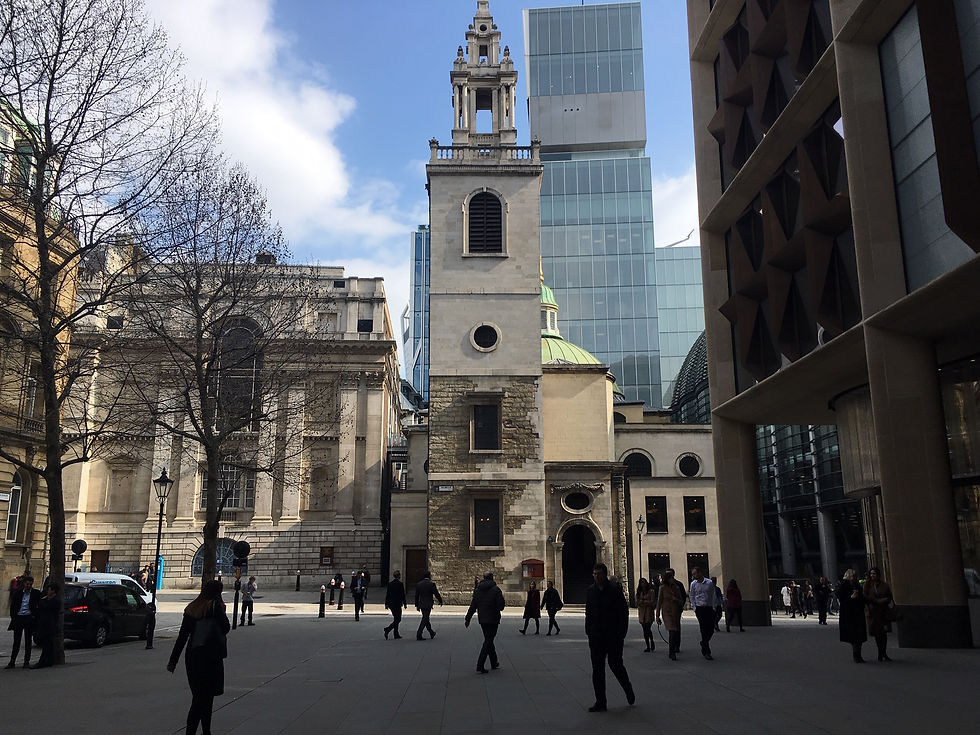
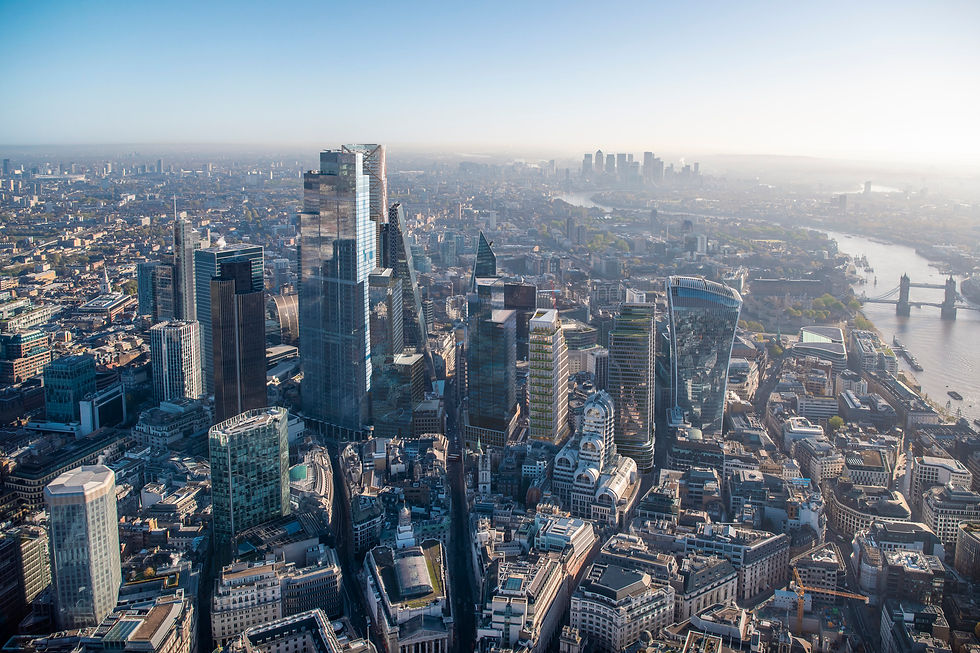
'We've always had this feeling that our relationship in terms of places is a very deeply rooted and very significant one. And that's why the tower is at the heart of our city plan which we've thought through, which deals with the cluster expansion. This isn't a plan which has gained universal consensus. We need to put that out there now... we understand that concern..... We do, though, have a lot of pressure on us to provide commercial space and new growth for the UK. (It's about) prosperity at the end of the day.
' We have a minimum of 142 million square metres to be defined. So the cluster is going to grow for that reason. But what we have done is make sure the cluster is entirely shaped by the use of the Tower and the use of support and control and the use of environment. And so we see the White Tower as having this extraordinary influence. Andrew (Jackson, Tower Director) mentioned how it has been for years, centuries, the tallest building in London. Well, it may not be the tallest building, absolutely, in the city. But it wields an influence over the shape of the cluster beyond the towers, the individual towers you see, far greater than any more simple building. We like to see heritage in that way. You know, it's built to have extraordinary agency, if you like.
'In terms of the design of some of the new towers, I think a tower will always provoke some type of opinion because of what it is, because of its sheer size, because of its carbon investment, and because of the fact that they are relatively new phenomena. I mean, tall buildings, building architectural height is an interesting thing....actually, if you look at the NLA's tall building survey, which happens every year, there's this extraordinary uptick from about the millennium of high rise across that. So, these are new things that the entire population is grappling with in some ways.
'What we have done in the City, though, is been really careful to make connections. So, we have tried to make them public where we can. So, with the elevated public spaces that we have provided on the top of them, we have tried to say to London's population, the population of the UK, that these are buildings for you as well.... We want to create a democratic skyline for that reason. So, we think our cluster, fundamentally shaped by the Tower, although we disagree about the rows of heights and the rows that are profiled with that cluster......provided with elevated spaces at the summits of these towers, we feel we are giving something back, which is quite unique.'
Tom continued:
'In the past we have been slightly monocultural, it's fair to say, particularly in the 20th century. Really, since the coming of the railways, which is when our other functions started to flow out, the City was residential and other things. You know, we were actually a very interesting place for most of our existence. We had all kinds of things going on within the city walls. What we're trying to do now is bring some of that back.... We aren't seeking to provide something residential because that comes with challenges for us in terms of building new tall buildings and other such things. We need to find as much space as we can for our commercial function.
'But increasingly, through mixing the use of our towers and individual schemes, we integrate culture into them. And these towers, you know, we increasingly speak of them as having a lion's share of commercial space and then a kind of angel's share of public and cultural facilities, which, you know, give them a gloss which you don't have in any other towers in that particular field. And that is, we need to do that. We're obliged to do that because of the prominence of what we do, the centrality of it to the UK, but also the prominence on London's skyline. We do recognise that we have a serious responsibility here to make this cluster that we have, as democratic and as open as possible. And increasingly, through the way in which our city plan approaches community engagement and the development of individual schemes, more communities are brought into that process than ever before.
'So we feel we're on the right track, although of course we still are seen as this place of suits and banking and so on. But we also think that's what gives us a really unique energy as a destination. You know, we are not solely based around tourism. Tourism is a very important thing, but that's not our only function. Our main function is our commercial function. That's what gives charisma and dynamism, which we hope makes us an interesting place to build.'
Emma Squire was then asked to speak about Historic England's new Strategic Plan 2026 to 2031 and how it aims to ensure how the positive role of heritage is recognised and embedded in local plans and skills pathways.
'We just published our new strategy yesterday. And there are three priorities in that strategy that I think would speak to your question. They're around growth, because we really believe that heritage and growth goes hand in hand. Every generation can help make places where people want to be, where they want to live, work, visit and invest. They are around place making, so influencing spatial plans.
'Targeting our grants and communities to the utmost is very important. Working with community groups to make really special places. And then around convening the sector and trying to speak with one voice. And put together our policy and evidence and programmes and guidance to really support the sector. That's what we just did as a belief for the heritage agenda. It matters in its own right, for learning, for joy, for feeling connected to the place that you are in, but also that it can help and contribute to solving lots of societal challenges, whether that's housing supply, or community cohesion, or net zero through retrofitting the fifth of homes and the third of commercial buildings that are being built.
Emma was asked about how Historic England is working to combat climate change:
'The first thing we would always reach for is helping to make buildings more climate resilient. So we published some guidance on the best kinds of retrofit interventions that are suitable for listed buildings to help custodians think through that. We're working in partnership with the kinds of landlords that can take a really long-term view, so the Grosvenor Estate, the Crown Estate, and others, to trial new technologies, and to think about whether we could, through the planning system, make it much easier to, for example, put bigger, way more-to-good utility buildings by experimenting with fresh ones at building consent borders.
'There is a global discussion, People call it different things, adaptive re-use is one name, but if there is important heritage that just will succumb to rising seawater levels or flooding, then what do you do? What is the best solution? I don't think we've alighted on a policy there, but it is something where our team of researchers are thinking hard and talking to custodians of the kinds of heritage that might be at risk in that way.

Heritage buildings can be grand or appreciated on a smaller scale and Emma was asked about Historic England's work with high streets:
'Thank you so much for mentioning the High Street Heritage Action Zone programme because it was a four year programme, £98 million and we supported 67 high streets working in partnership with local authorities with community groups. It was a little bit different in each place where we worked. We tried to reintroduce housing above the shop to drive footfall and make streets safer and bring the life and privacy back. We tried to work with community groups to find new uses for empty buildings.
'We of course focused on the facades and restoring those to make High Streets that people could really feel proud in. We animated them with cultural programs. We looked at public realm improvements in pocket parks. And we learned an awful lot. We did what I would describe as best in class evaluation. But obviously it was a time-limited and resource-limited program. We're monitoring the legacy, and the government has announced a significant investment in future High Streets. So we're talking to other partners on how we can bring our experience and knowledge to bear to make sure that that money goes as far as it can in terms of really thinking about the future of our students.
'And I feel I didn't do justice to your City of London question, so I will just return to that, which is to say, I think Andrew (Jackson, the Tower Director) and Tom (Nancollas) rehearsed the different perspectives really well. I completely echo Andrew's sentiment that it's all about talking, understanding different perspectives. Our perspective on the talk of the cluster is well publicised, but there are many areas where we work brilliantly with the city, and one of those is the future of Smithfield..... But there's more space in that former market that we are really keen to look at as a really exciting cultural destination for the City and for London. And we would always rather see historic buildings brought up to spec for all the requirements and in use and being enjoyed and preserved in that space than sort of deteriorating and so on.'

Comments